Sunday, 3 June 2012

Collective Ambition


Do you work with people who seem to be waiting for their time at the workplace to come to an end, either daily or longer term? Some seem to have a lot of experience, yet they aren’t quite representing your organization’s evolving values and leadership style . You’ll recognize them if they seem to be putting in the hours but lack an obvious key ingredient: ambition.

Other team members may notice and ask themselves why these individuals just keep coming back to work even though their motivation tanked long ago. The sad truth is that the folks I’m talking about have worked hard their whole careers and blazed trails back in the day when they were driven and ambitious. When and why does this change for some individuals, and not for others? A colleague told me this week that she thought it was because folks fitting this profile have stopped leading change. If this true, this is a serious problem – unless ambition can be nurtured or rekindled, what options do you have to deal with these circumstances? A bigger challenge is to consider how to prevent a new regime of employees from running out of ambition - ever.

Let’s pause here for a moment to distinguish between ambition at an individual level and “collective ambition" as described by Ready and Trulove (2011) in their article The Power of Collective Ambition .

What I learned most from the Ready and Truelove article is that one important aspect of “collective ambition” is a clearly defined definition of leadership behavior. Within a frame work of "collective ambition", leadership behavior is defined as how leaders act daily as they implement the organization’s vision and strategies, striving to fulfill the brand promise, and living up to the organization’s values. There’s a problem when some leaders’ ambitions fizzle, or if they are anchored in a past vision and an old set of values.

I suppose the lesson here for all of us is, that individual motivation and ambition is fundamental to creating a "collectively ambitious" work environment. Take the survey in the Ready and Truelove article to see where your organization scores, and then ask others you work with to do so too just out of curiosity to find out if your perspective is more or less optimistic than the collective group.

The article stipulates that an organization’s purpose is the most important of the seven elements of collective ambition, however, we have to remind ourselves that any one of the seven elements on their own, or even in combination with two or three elements won’t yield the same benefit as an integrated approach. In summary and in closing, here are the seven elements necessary to foster "collective ambition":

Purpose: your company’s reason for being; the core mission of the enterprise.

Vision: the position or status your company aspires to achieve within a reasonable time frame.

Targets and milestones: the metrics you use to assess progress toward your vision.

Strategic and operational priorities: the actions you do or do not take in pursuit of your vision.

Brand promise: the commitments you make to stakeholders (customers, communities, investors, employees, regulators, and partners) concerning the experience the company will provide.

Core values: the guiding principles that dictate what you stand for as an organization, in good times and bad.

Leader behaviors: how leaders act on a daily basis as they seek to implement the company’s vision and strategic priorities, strive to fulfill the brand promise, and live up to the values.

I love sports analogies, especially because I love certain sports. I suppose this attraction is due to the entertainment value sports provide, but I also imagine that in some instances, art imitates life and sports stories tell us more about parallel journeys we have in other parts, even in the workplace. Check out this two minute video to see what individual ambition looks like (it gets better after 1:30 minutes). Then imagine if you had a whole team of players with the same attitude, heart, and ambition as individuals, and collectively.

I will leave you with your imagination on that last point. I'll be back next weekend.

Sunday, 20 May 2012

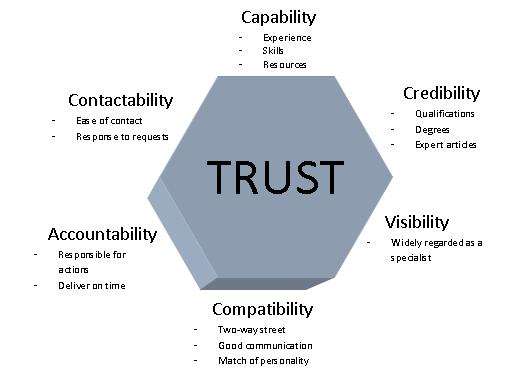
Trust


Trust.  How have you successfully achieved this in your workplace?

I’m no expert in human behavior, or in relationships, but I do know what I like.  I like the scenario Bradford and Cohen  describe in their book Managing for Excellence (1982):  “Meeting time will still be needed to hammer out basic agreement on goals and objectives and to build trust among members.  But when those steps have been accomplished, people can speak for each other, and for the group, without creating suspicion.  When new problems and opportunities arise, any member can act quickly, without the time-consuming restriction of first having to check out the solution with the leader or other members" (p. 300).  Sigh.  That sounds terrific, and when you have achieved this with your team, it doesn’t take long to realize it and to reap the benefits.  But not every workplace achieves this high level of trust easily.  Most times, it takes leadership and hard work.  

As leaders, we have many methods to select from to help shape our teams’ health and trust level.  But let’s focus on two obvious choices when it comes to trust. 

One alternative is to blindly trust your teams, colleagues, and others in your workplace from the very beginning until something occurs to decrease that trust. I tend to think of this description of trust as a form of currency with a net value that either increases or decreases depending on transactions with people.  It is a chancy option, but one has to be honest in saying that sometimes things happen that increase trust, or decrease it, and that it really is like a sliding scale. But my main aim here is simply to illustrate that the starting point within this definition is a positive one.  As the leader in this situation, I would declare my trust in everyone until they provide evidence that I shouldn’t have trusted them so wholeheartedly.  

 A second option is to wait patiently until trust is gained, either over time, or over the course of a specific type of event.  This option’s starting point is a bit more tentative – kind of like an open book with blank pages just waiting to be written on.   I often think of this situation to be more similar to relationships in general: wait and see.  As in “real life”, you get to know people in your workplace over time and through the course of a series of events that cause you to work closely together – and at times, with healthy debate. You get to know each other better, learn to appreciate your differences, and can more readily identify when in future circumstances how individual strengths and perspectives might come in handy. 

 Like many other leaders, I used to approach the workplace with the first option in mind and heart, especially with new teams.  Often as the newest member, my choice was to proceed with the utmost trust in my colleagues.  Then, over time, if there were circumstances that shifted that trust down the scale, I’d just adjust my expectations of individual(s) accordingly.   Fortunately, that scale would often find itself eventually sliding back up…but not always.  There were times when I was disappointed. 

Learning more about how teams function and the leader’s role in achieving ‘high performing” teams, I’ve changed my tactics when it comes to something as important as trust.   I no longer approach this important work quality as I did.  These days, I rely on experts on this topic, such as management researchers who’ve examined team dynamics extensively. I have found using ideas described in Bradford and Cohen’s book useful, as well as other strategies.  And I’ve learned to be patient – because sometimes something worth having takes time. 

How have you gained trust in your teams?  Share with me at jbezz@shaw.ca,  and I will post all feedback as it comes in.    

Sunday, 6 May 2012

How Much More Change Can You Expect?


Are you growing tired of hearing how people on your team or organization report they are "change fatigued" or "changed out"?  Do the same folks bristle at yet another change initiative with body language evoking their obvious displeasure?  I'm talking about rolling eyes, crossing arms, smirks, and other impolite gestures - including the ones targeting you behind your back.  I know, I know...we have to be patient with these folks, but how can we distinguish between resistance and a genuine capacity issue?  How do we really understand what’s going on?
Be The Change
As a leader, you’re usually the one initiating change.  Whether you’ve been with your organization for 11 months or 11 years, you may have noticed how team members and front line staff react at the notion of more change.  If your organization functions as a finely tuned machine, change might even be driven by frontline staff who have become problem solvers and innovators.  But what can you do if your organization is still in transition to becoming a high-performing one? 

Getting your leaders on board and enthusiastic about an improvement or change is the first step and a big part of the process to whatever organizational change you attempt.  Let’s talk about those occasions where, despite the evidence, your leaders just don’t seem keen to ramp up to the right energy level to lead.  This is concerning.  After all, aren’t leaders at all levels expected to motivate staff to embrace continuous improvement opportunities?   I'm always amazed that in a world where every single industry known to humankind is looking for ways in which to improve quality, efficiency, effectiveness, and public satisfaction we still encounter issues at the onset of a change initiative. 
Answer this question: How can you really tell if attitude is getting in the way or if you really should consider waiting to launch a new change?   When the stakes are high, you won’t want to delay an impactful improvement.  However, knowing more about your status can help you determine your timing and strategy.  There are a couple of resources available that you could use to obtain an objective opinion.  Well, maybe not totally objective.  What I’m about to introduce is one tool you can use to evaluate your situation, based on your assessment.

Peter Vaill includes a Change Assessment Inventory in his book, Learning As A Way Of Being (one of my favorites!).  This easy tool consists of 21 short statements against which you are asked to assess your organization’s status vis a vis change.  With this assessment, you rank with positive or negative digits from -3 to +3, and your overall score is the net result of the positive and negative numbers.  What the tool really helps you understand is whether your work environment is becoming more dynamic, changing, unpredictable and turbulent.  A warning before you take the test:   not all the positive results are good.  While this inventory will give you some valuable insight, Vaill also cautions that there could be other factors contributing to a feeling of instability in the organization.  Read this book!  It  is an excellent resource for those of us leading through turbulent and unstable times.   Take the Inventory more than once a year to gauge areas in which where your organization has made gains since the last time you really looked closely.  Have fun with the Assessment, and share your experiences with us here! 

Sunday, 22 April 2012

Crucial Conversations


I took a break from blogging for a couple of weeks while on vacation in Arizona.  It was a memorable time, between the heat – in contrast to the Vancouver weather I was escaping – and driving out of a snow storm leaving the Grand Canyon.  But it was memorable for another reason too, which is what I want to talk about today. 
Have you ever encountered situations or learned something that became pivotal to your personal life or career?  Of course you have…that was rhetorical!  My trip to Arizona turns out to be pivotal for me, but not because of the heat or snow.   Before leaving for my vacation, a friend talked to me about a resource she’d come across and suggested that in my quest to keep learning new things, I might find it useful.  Well, it certainly has had an impact on my perspective, and I want to share it with you. 

I started reading a book called Crucial Conversations: Tools for Talking When Stakes Are High.  This book is now in its second edition, so readership has been around for awhile and continues to build momentum.  I’m not done reading the book yet, but I can already see how it is yet another resource to add to my own leadership arsenal, and one I will share with developing, emerging leaders in my circle. 
Frankly, I found the early chapters boring.  Who doesn’t already know that there are three ways to handle a crucial conversation:  1. Avoid it, 2. Face it and handle it poorly, or 3. Face it and handle it well.  Given these three options, I prefer the last one, but if I’m going to be honest with myself, I’ve spent a lot of time opting for doors 1 and 2.

 Being stubborn and one of those folks who rarely stops reading a book even when it is not captivating from the beginning, I pressed on reading page by page.  Then the holiday was over and I had to be back in the office.  Oddly enough, the book I thought wasn’t teaching me anything new started cropping up in my thoughts as I encountered the variety of situations leaders face on a day-to-day basis.  I started observing others interacting and noticed opportunities to nail conversations more effectively and with resolution.  Then I tested some of the lessons I read and learned about in the book, and while that took a lot of nerve and courage, lo and behold, I recognized that some of the stuff from this book just might work!
For example, when I purposefully opened myself up and injected a high degree of “heart” in my conversations and demonstrated some of my own vulnerability - which most of us find risky- I could see how that gave prospect to more possibilities in the discussion.  This strategy actually took me places I don't think would have been possible in a regular, run-of-the-mill conversation.  So for something I thought was uninspiring at the onset, I’ve turned full circle.  My first impressions of this book weren’t great, but I see real potential now. 

I’ve included a few resources for you if you want to get a glimpse at the book’s content.  See this PDF link entitled Book Notes and/or this Powerpoint presentation.  In my view, this book is worth a close look by leaders.  If you have read it and would like to share a story, why not let me feature your experience in a future blog?  I’d love to hear from you.  In the meantime, take care and have a great week!

Tuesday, 3 April 2012

Mirror, mirror on the wall....

Who do you confide in when you’ve got a workplace dilemma? Do you vent with your family when you get home, or do you have a network of former or current colleagues you can call on for moral support? What about your frustrations? Who do you trust enough to say what’s on your mind and in your heart when it comes to what’s not going so well? How about your fears that failure is stalking you? If you’ve ever found yourself asking who to turn to for any of the above, you’re not alone.

Like most leaders, you’ve come to realize that things aren’t always going to go your way. There are the usual hiccups that one learns to accept as par for the course. Usually, these types of glitches just run off your back. Then there are all the other times. You know what I’m talking about: those “once- in- a- blue- moon” times when you are caught off-guard and confused about what to do next. Or you’ve been snagged in the political web -the sticky, icky kind- and you don’t know what to think.

Sometimes, when things get desperate, you might begin to wonder if you’re really fitting in with your team, or your organization. The Gallup Organization has been doing workplace surveys for years, and one of its twelve key questions asks respondents whether they have a best friend at work. In answering whether you have a best friend at work, you’re exploring how you fit in with your organization. Answering this question might also give you some insight as to whether you’ve got close connections with whom you can check out your perceptions. (See Overview of the Gallup Organization’s Q-12 Survey by Louis R. Forbringer, Ph.d. for more information on Gallup and the survey).

I had a former colleague who worked with me in a remote Canadian First Nations community who reached out to me on a daily basis. Maybe I’m exaggerating a bit…but it was at least once a week. Honest. Now that I think about it, it was partially because we both had little in the shape of social networks, but I learned to expect a visit or phone call from this gal anytime. Invariably, when things were really bad, the talk usually ended after a few tears on her end and reassurances on mine. Admittedly, there were times when we reversed roles. I don’t know that we solved any of our respective problems-of-the-day, but I think we both felt little better just getting things off our chests.

A mentor of mine told me that as a leader, I had to get used to talking to the mirror. At the time, I thought he meant that there were always going to be certain things that had to be reserved to be discussed in privacy and only to that person in the mirror. Period. I understood this to mean that some opinions, questions, or concerns were best kept to oneself. I found this stressful. As I matured, I realized that the “mirror” analogy could include one or two key people in your life with whom you could share most things. Now days, I feel strongly enough to say your mirror should reflect a small, trusted network (no pun intended!).

In my world, I do have a few folks I use as mirrors; good work friends who’ll set me straight or tell me I’m way off base. Then again, they’re the same people who form my support system when I need it the most, and I know I am their mirror as well. Sometimes the mirror is just for a quick glance and “flick of the hair” or touch-up. Sometimes a bit more maintenance.

Turns out, having a mirror in my life has been fantastic – but I warn you: you have to look high and low for the right one or two. I hope if you don’t have your mirror(s) that you’ll find one soon. If you have another solution to the concept of a workplace mirror, or if you have a “best friend at work” and you want to share your story, please drop me a line @ jbezz@shaw.ca.

I’ll be heading out tomorrow for a short holiday and will be back in a few weeks. No blogs from me until the middle of April. I sure hope you’re enjoying these entries. I know I am.

Take good care of yourself!

Sunday, 25 March 2012

Have you said thank you today?


I had a real eye opener this week.  Because of an urgent situation in my sector, I witnessed incredible leadership from the usual types.  I’ve always known that the people I see everyday are at times extraordinary, but I was still taken aback and I’m still thinking about it today, almost a week later. 
This event required two teams working simultaneously to communicate with a whole host of other individuals and to take action so the chances of very high risk situations could be averted.   We all came together, stayed at work late after an already full day, and then continued to be on alert for several more days.  After the first evening, I went home pretty tired and thought I should do something to recognize my immediate team.  I mean, even though one could argue that we just did whatever was needed in this kind of situation, it wasn’t sitting well with me not to say something simple, like “thank you”.   The next morning, I sent off a note to everyone who was involved in the scene.  I didn’t think anything more about this till I remembered that the previous week, I was asked if I’d anonymously sent a group of people in the office beautiful plants they’d received.  When asked if I had, I said I had not, but added that I wished I had.  This situation and the one described above make me ask:  do we say “thank you” enough to people in the workplace?  And if not, how often is enough and what qualifies for this special recognition?

Many modern workplaces have tons of different ways in which they recognize employees, some of which quickly become routine and lose their punch, and others that are successful and have lasting meaning.  I’m starting to think that there are very simple ways to recognize and thank people that don’t involve a whole lot of fanfare, but that can have a deep and personal meaning to the people receiving the acknowledgement. 

I remember the first time I got a thank you card.  I was working in the Canadian Arctic in very remote, challenging conditions.  By the time the card rolled around, I’d been there for almost three years, and it was the first time anyone took the time to acknowledge that even though there was a lot more work to do (my assessment), what had been achieved or attempted was appreciated.  I kept that card on my desk until I got a second one, and then I placed them together and kept them in my sight until I left the following year.  I felt deeply and sincerely appreciated.  No fanfare or public display.  But I knew what it meant to me.
How did the staff in my office feel when they got their plants anonymously?  Appreciated – maybe a bit perplexed as to who sent them, but appreciated.  How do you feel when you get special notice? – I’d actually like to hear from you on this question, or if you want to tell me what you think would be effective recognition for notable circumstances. 

In Hardwiring Excellence, Quint Studer devotes a whole section on WOW cards, recognition, rewards, and thank you notes.  He recommends developing a system to notify you or your boss of individuals in your organization who have earned special notice.  He actually suggests that organizations should set targets for the number of thank you cards they send.  Furthermore, there are some thank you notes that should have distinction and be sent to a person’s home.  Imagine that?  Getting a thank you note from your boss at home?  Visualize being the one who sends the note to someone’s home and imagine the lasting memory that would have.  Isn’t this one of the greatest things about leadership?  Isn’t that what sets us apart from other types in the workplace?  We have the power, ability, tools, and means to deliver powerful and positive messages to staff.  Do we take advantage of that ability as much as we should?
For several years after I got my first two thank you cards, I kept a package of cards and passed them on to people I knew had really done something exceptional.  I did that for years.  Somewhere, somehow I stopped.  I don’t know why.  But later today, I’m going to get a new batch and have them ready and available.  What about you?  Tell us how you recognize your staff and what impact it has.

If you have any comments or questions, please feel free to post below (sign up for a free Google account), or email me directly at jbezz@shaw.ca.
Have a great week!

Monday, 19 March 2012

If You're Not In, You're In the Way!

A reader wrote me a few weeks ago with a request for resources on the topic of how to deal with individuals reluctant or unable to embrace change. He asserted that as much as leadership requires courage to take calculated risks to move the organization along the path of transformation and ultimately change, it requires a different type of courage to deal with some of the organizational obstacles that might be standing in the way. Namely, this colleague was asking about how to go about removing these obstacles, which in some cases are individuals in the organization who are not able to embrace the change. Touchy topic.

Let’s start by admitting there are no straightforward solutions to this issue even though this seems to come up regularly in any leadership and management practice. Some leadership gurus stress the importance of teams and team skill building, like Peter Senge does in his widely acclaimed book The fifth discipline: The art &practice of the learning organization.  Senge contends the best approach is to consider the collective, and not the individual. But what if you assess your team on an individual level and find that one person is underperforming?

As a change leader, you already know there are numerous steps and measures to take into account while leading up to a change and eventually to the execution of the change. During each of these stages, you have the opportunity (and dare I say, the responsibility) to assess the environment, to gauge staff morale about the change, to evaluate staff and management uptake on the notion of the change, and to identify problem areas. If you suspect one of your team members is struggling with a change, you also must perform an objective assessment of the individual’s competency to cope with the change.
The experts also recommend an assessment of whether or not the individual possesses the emotional preparedness and attitudes to change. And what if there still isn’t any commitment? At that point, you would probably categorize this individual as a low performer as described by Quint Studer in Hardwiring Excellence.  I like Studer’s nifty recipe to tackle this head-on:

·         Describe the behavior you see and what you want to see change (I asked you to speak to your team about our new strategic direction and you didn’t follow through on this.  Your colleagues are worried about proceeding without your team on board with the change.)

·         Evaluate how you feel  (I am really disappointed and concerned because we are rolling this out to our stakeholders and your own staff are not yet aware of our new direction)

·         Show how you’d like it done (I’ll join you at the next staff meeting and lead a discussion on this important subject)

·         Let them know the impact of not following through next time (You have to demonstrate that you’re onboard with this our new direction or we will have to talk about serious consequences)
Of course, Studer’s message regarding low performers is clear: you give people a chance, but if all else fails, you MUST ACT. Simply put, low performers need feedback to pick up, or move out.

As difficult as it is, low performers can really affect the rest of your team’s performance and your efforts to change.  Act swiftly and decisively once your objective assessment reveals you have a low performer in your midst, and when necessary, help them move on.
If you have comments you'd like to share with me about this blog, please write me at jbezz@shaw.ca